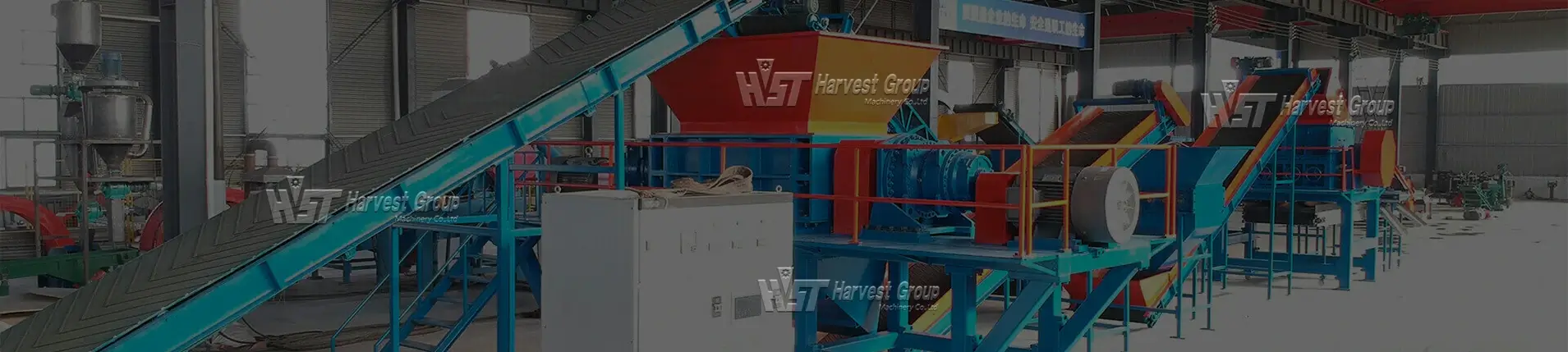
Waste tires are no longer just an environmental burden. With the right recycling technology, they can be transformed into valuable industrial materials used across construction, energy, and manufacturing industries.
Tire shredding is the first and most critical step in this process. It converts whole tires into reusable materials such as rubber chips, crumb rubber, steel wire, and fine rubber powder.
For investors and recycling businesses, this is not just waste processing—it is a scalable and profitable industry with long-term demand.
Tire shredding is a mechanical process that reduces scrap tires into smaller sizes for further processing or direct use.
Modern shredding systems are designed to handle different types of tires, including passenger car tires, truck tires, and OTR tires. With proper configuration, the process can achieve high efficiency, stable output, and excellent material separation.
The goal is not only size reduction, but also to maximize the recovery of rubber, steel, and fiber.
A stable supply of scrap tires is the foundation of the business. Tires can be sourced from garages, recycling centers, transport companies, and landfill systems.
In many regions, disposal fees create an additional revenue stream even before processing begins.
Before shredding, tire beads and steel wires are removed to protect equipment and improve output quality.
This step also allows recovery of high-value steel, which can be sold separately.
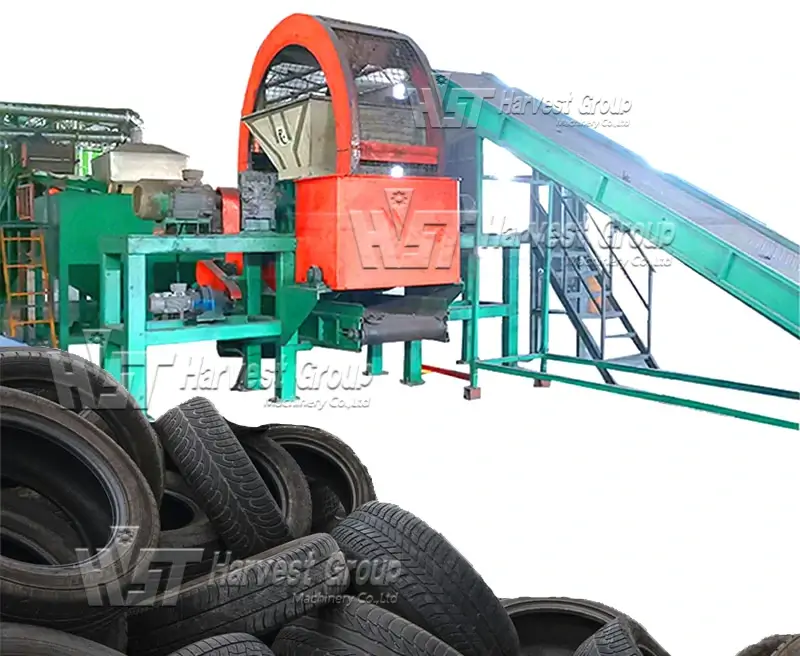
Whole tires are processed through a heavy-duty tire shredder.
The output size is typically 50–150 mm tire chips, which can be used directly as TDF (tire derived fuel) or sent for further processing.
The shredded material goes through rasper and granulator systems.
At this stage, steel wire is removed up to 98–99%, and rubber is refined into smaller granules such as 10–30 mm or 1–6 mm sizes.
For higher-value products, rubber can be processed into fine powder such as 20–120 mesh.
Advanced systems ensure high purity levels up to 99.5%, meeting the requirements of applications like rubber flooring, asphalt modification, and industrial rubber products.
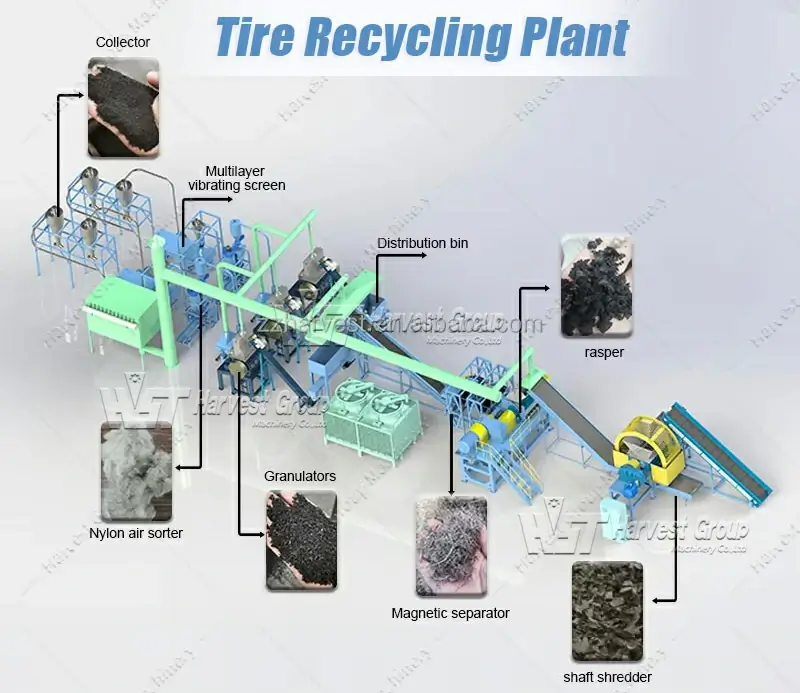
A complete tire shredding and recycling system can produce multiple commercial outputs.
Rubber chips are widely used as fuel in cement plants and power plants.
Rubber mulch is used for landscaping, playgrounds, and safety surfaces.
Rubber granules are used in sports tracks, artificial turf, and rubber tiles.
Fine rubber powder is used in asphalt modification, waterproof materials, and industrial rubber manufacturing.
Steel wire and nylon fiber are also recovered and sold as recyclable materials.
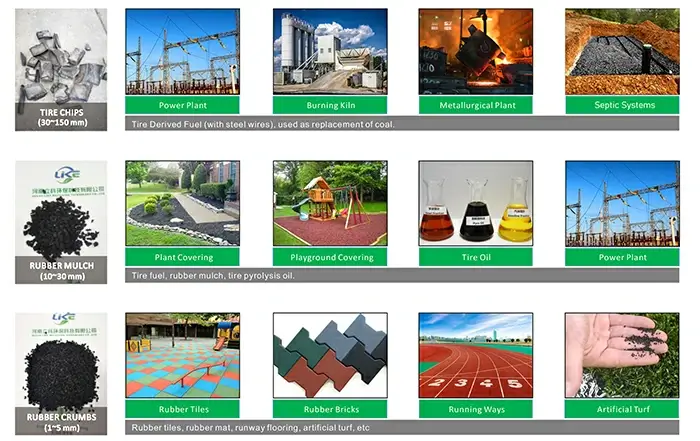
A professional tire shredding line typically includes
Tire debeader and cutter for pre-treatment
Primary tire shredder for size reduction
Rasper for steel separation
Granulator for fine rubber processing
Miller or grinder for powder production
Separation systems for steel and fiber removal
Depending on the required output size and capacity, systems can be configured as semi-automatic or fully automatic lines.

Modern tire recycling systems can process from 500 kg/h up to 30 tons per hour.
Output sizes can be customized from large tire chips to ultra-fine rubber powder.
Flexible configurations allow businesses to target different markets and adjust production based on demand.
The tire recycling industry benefits from
Continuous supply of raw materials
Multiple revenue streams
Strong global demand
Environmental policy support
Low raw material cost and high value output
With the right equipment and process design, businesses can achieve stable returns and long-term growth.
Zhengzhou Harvest Machinery Co., Ltd. has been specializing in tire recycling equipment since 1997.
With more than two decades of experience, we have delivered complete recycling solutions to over 50 countries and served more than 5,000 customers worldwide.
Our systems are designed for high efficiency, high steel removal rate, and long-term stable operation.
We provide full support including project design, equipment manufacturing, installation guidance, and after-sales service.
All machines meet international standards such as CE and ISO certification.
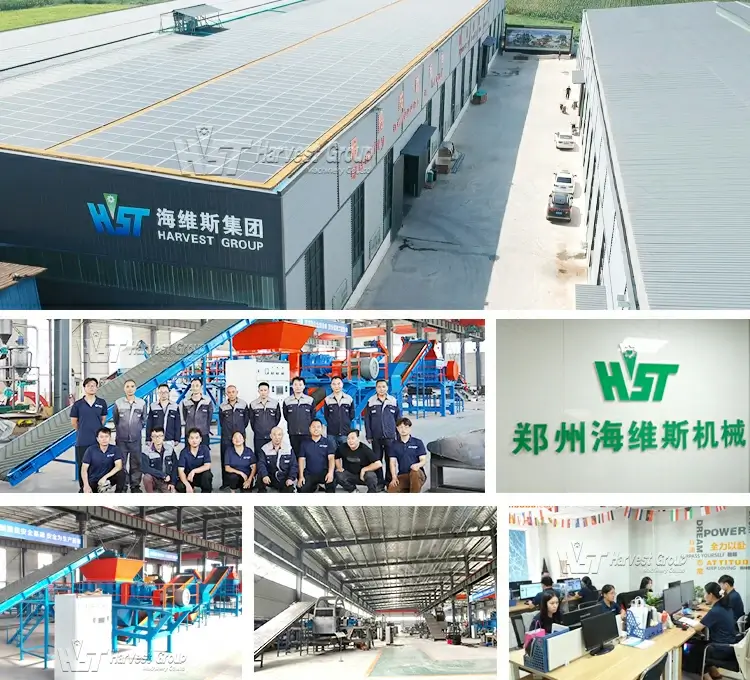
Free technical consulting based on your project
Customized layout design according to your site
Flexible capacity solutions
OEM and ODM support
Installation guidance and training
Stable spare parts supply
Long-term warranty support
The cost depends on capacity, automation level, and final product size. Small systems start from tens of thousands of dollars, while full automatic lines can reach higher investment levels.
Rubber powder and high-purity crumb rubber usually offer the highest profit margins. However, TDF and rubber mulch are easier to sell in large volumes.
Yes. With advanced separation systems including magnetic separators and fiber removal units, high purity levels can be achieved depending on configuration.
Our systems can handle passenger car tires, truck tires, and OTR tires with different configurations.
It depends on capacity. Small plants may require a few hundred square meters, while large industrial lines need more space for full operation.
Yes. Our systems are designed with dust collection and low-noise operation to meet international environmental standards.
Tire shredding is not just a recycling solution—it is a profitable and scalable business opportunity.
With the right equipment and support, you can turn waste tires into valuable products and build a sustainable business.
Contact us today to get a customized tire recycling solution tailored to your market and investment plan.