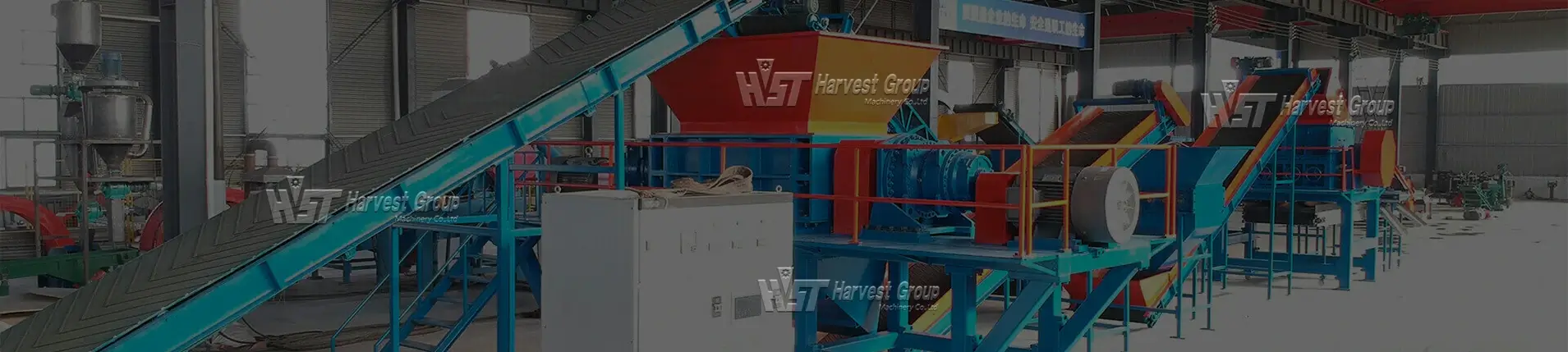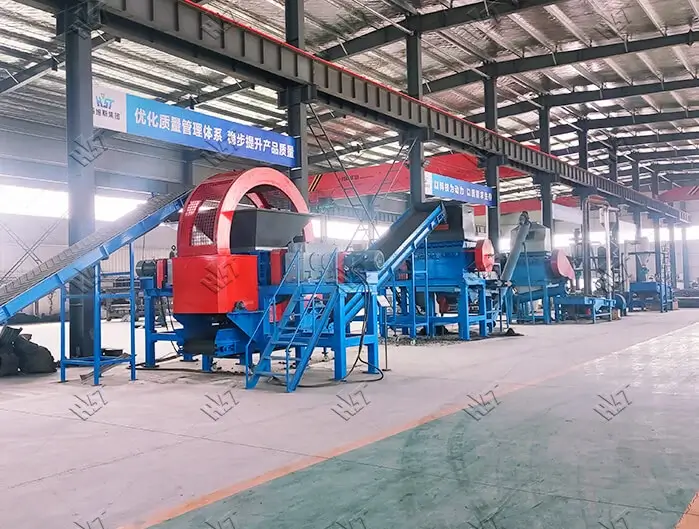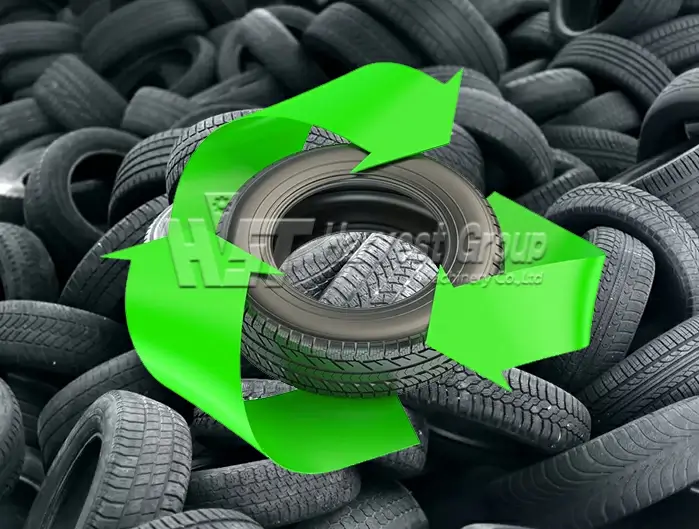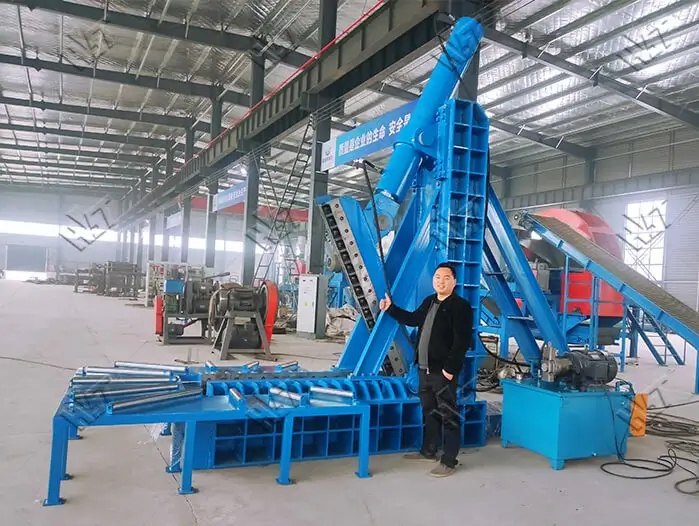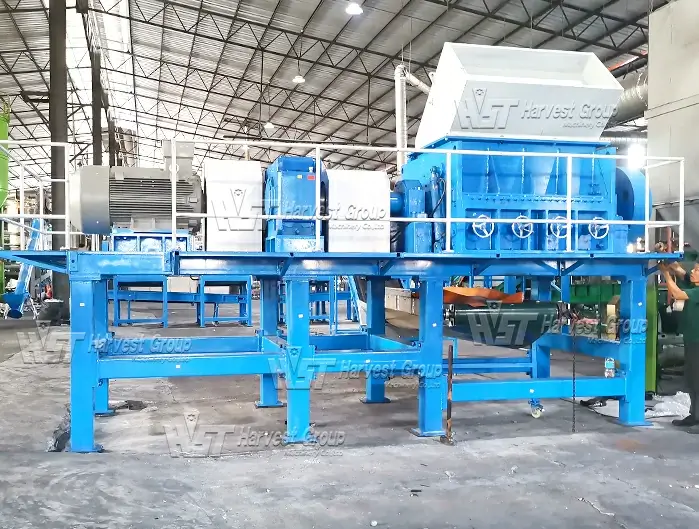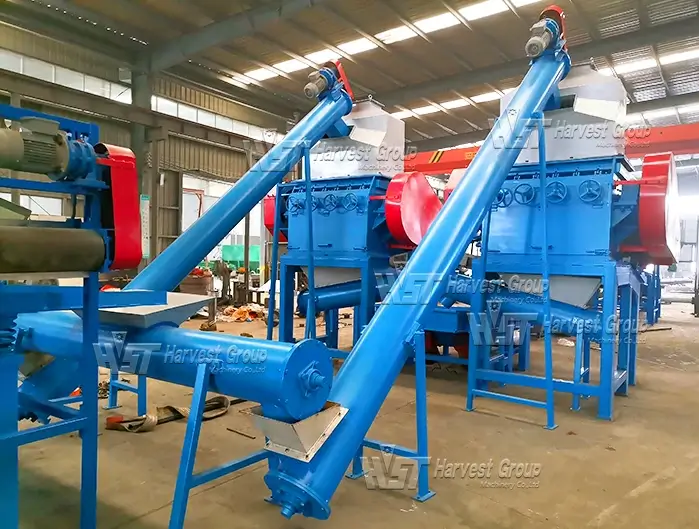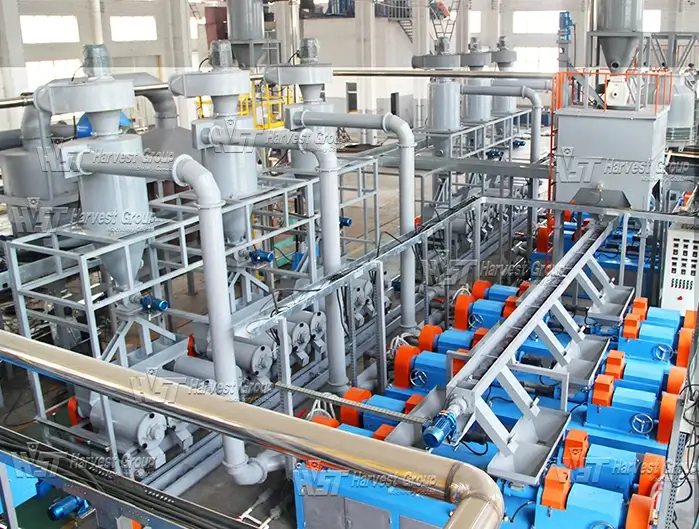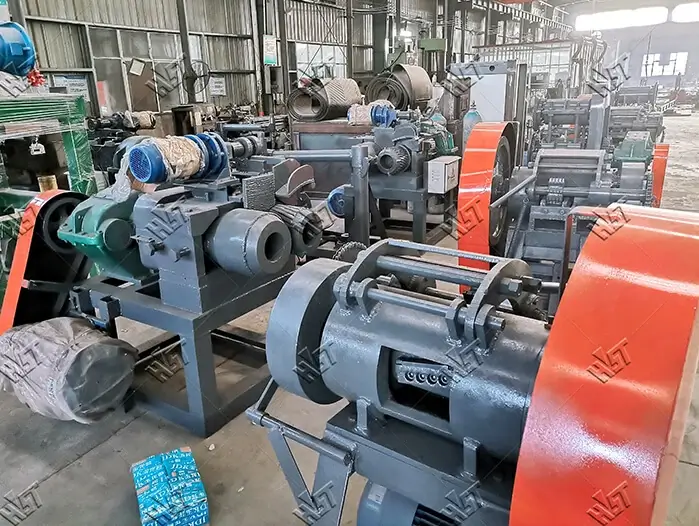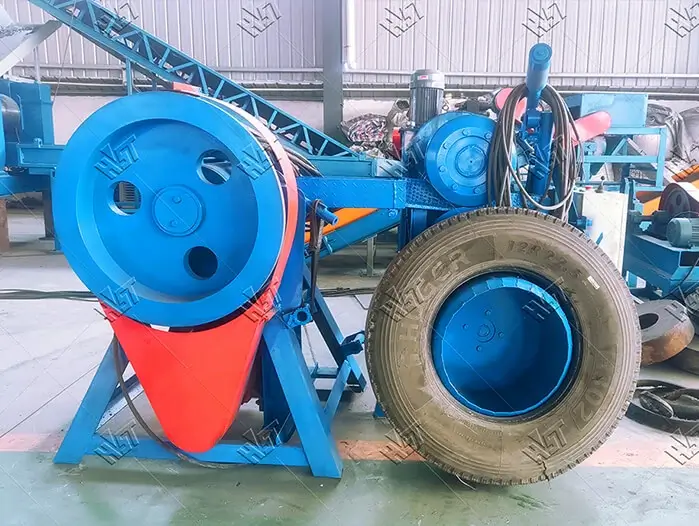


A tire recycling plant is a complete system used to process waste tires into rubber chips, crumb rubber, and fine powder. A typical tire recycling line includes shredding, granulation, and separation systems to ensure stable and efficient production.
We provide complete tire recycling plant solutions with different capacities and output sizes, including TDF lines, rubber mulch lines, crumb rubber lines, and rubber powder production lines.
Different tire recycling lines are designed based on final output size and application.
The TDF line is designed to shred waste tires into 50~150 mm tire-derived fuel (TDF).
Raw Material: car tires, truck tires and OTR tires
Output Material: 50~150 mm tire chips
Main Machines: tire shredder
Capacity: 1,000~30,000 kg/h
Application: cement kilns, industrial boilers, alternative fuel
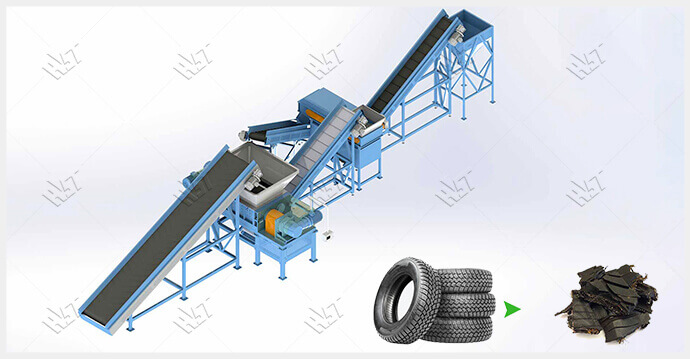
Rubber mulch line is designed to process waste tires into clean, uniform rubber mulch for playground surfaces, landscaping and sports applications.
Raw Material: car tires, truck tires, OTR tires
Output Material: rubber mulch (custom sizes available)
Main Machines: tire shredder, screening, steel & fiber separation
Capacity: 500~10,000 kg/h
Application: playground, landscaping, shock-absorbing surfaces
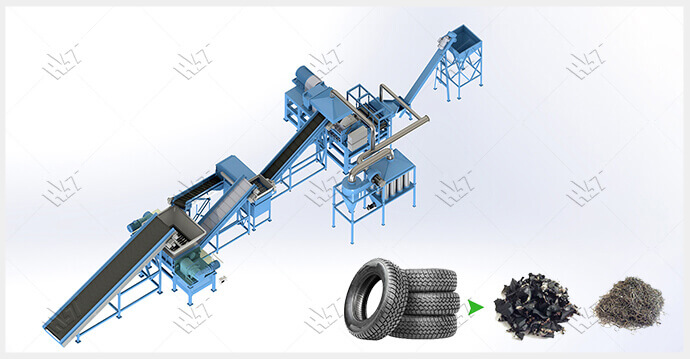
Rubber granule line is designed to turn waste tires into uniform 1~5 mm rubber granules with all steel and fiber removed.
Main Machines: tyre shredder, tyre rasper, tyre granulator machine
Output Material: 1~5 mm rubber crumbs, nylon fiber, steel
Capacity: 500~10,000 kg/h
Application: rubber tiles, rubber bricks, rubber mats, artificial turf, etc.
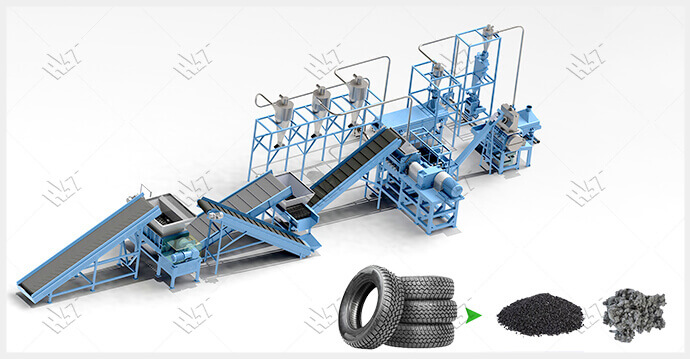
Rubber recycling plant is designed to mill waste tires into high quality and uncontaminated 20~100 mesh fine powder.
Main Machines: tire shredder, rasper, granulator, fine miller
Output Material: 20~100 mesh powder
Capacity: 100~10,000 kg/h
Application: reclaimed rubber, rubberized asphalt, waterproofing material, etc.
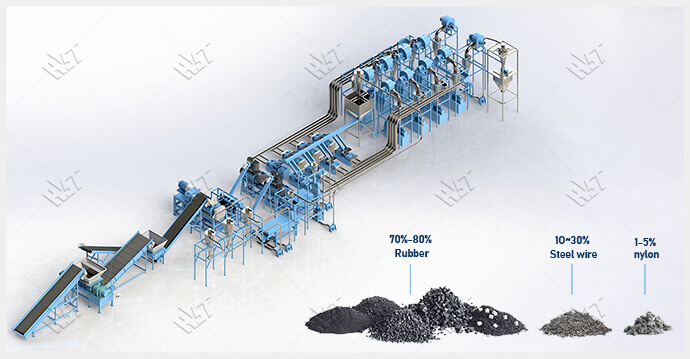
Rubber Powder Size: 5~40 mesh (0.5-5 mm)
Processing Capacity: 300~3000kg/h (Higher capacities available upon request)
Rubber Purity: ≥ 99.7%
Compatible Tire Types: Suitable for all tire types, with radial tires recommended
Rubber Granule Applications: Rubber tiles, mats, rubberized asphalt, oil pyrolysis, and more
Steel Wire Output: Ideal for use in metallurgy or metal processing industries
Key Advantages: Fully automated operation, wide range of output sizes, cost-effective, user-friendly, and energy-efficient
Read More

TDF Tire Recycling Plant Configuration

Rubber Mulch Production Line Configuration

Crumb Rubber Production Line Configuration

Rubber Powder Production Line Configuration

Rubber Granule Processing Plant

Rubber Powder Processing Line

Rubber Crushing and Processing Line

Scrap Tire Processing Plant
These tire recycling plant configurations are designed for different processing stages and output requirements. The final tire recycling line selection depends on raw material type, required output size, and project scale.
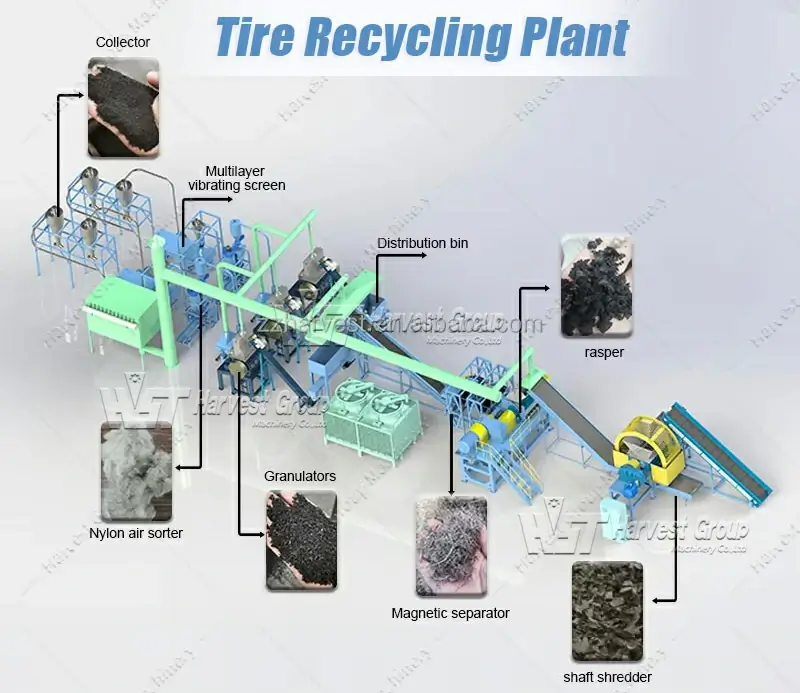
A typical tire recycling plant processes waste tires through several steps to reduce size and separate steel and fiber, producing high-quality rubber materials.
Removal of steel bead wire to prepare tires for further processing.
Tires are processed into 50–150 mm rubber chips.
Rubber chips are further reduced into smaller sizes for downstream processing.
Steel wire and fiber are removed to improve rubber purity.
Rubber is processed into granules or fine powder depending on final application.
Tire recycling plants produce valuable materials such as TDF,
rubber mulch, crumb rubber, and rubber powder,
depending on processing stages and output size. These materials are widely used in energy, construction, landscaping, and industrial applications.

✔ Customized Tire Recycling Plant Solutions
Designed based on your raw materials, capacity, and target output
✔ ISO & CE Certified Manufacturing
Ensuring stable performance and international standards
✔ Installation & Technical Support
On-site or remote guidance for smooth project operation
✔ Competitive Pricing
Cost-effective solutions with reliable long-term performance
Different waste tire recycling projects require different equipment configurations. The table below shows typical tire recycling line options based on final output goals.
|
Output Goal |
Core Line |
Typical Output |
Workforce |
Space Required |
|
Chips for TDF |
Crushing Line |
50–100 mm tire chips |
3–6 workers |
20–60 m² |
|
Rubber Crumb |
Granulation Line |
5–40 mesh rubber crumb |
3–6 workers |
30–80 m² |
|
Rubber Powder |
Milling Line |
40–140 mesh rubber powder |
4–8 workers |
40–100 m² |
|
Energy Recovery |
Pyrolysis oil & carbon black |
2–5 workers |
50–100 m² |
Note: Line configuration and layout can be customized according to plant capacity and local conditions.
|
Final Product |
Main Equipment Line |
Output Size |
Typical Capacity |
Recommended Application |
|
Tire Chips (TDF / TDA) |
Tire Shredder + Conveyor |
50–150 mm |
1–30 t/h |
Cement plants, power generation, fuel replacement |
|
Rubber Mulch |
Shredder + Rasper + Magnetic Separation |
10–30 mm |
1–15 t/h |
Playgrounds, landscaping, sports surfaces |
|
Rubber Crumb |
Granulation Line |
1–6 mm |
0.5–10 t/h |
Rubber products, flooring, modifiers |
|
Rubber Powder |
Granulation + Milling Line |
20–140 mesh |
0.1–10 t/h |
Asphalt modification, reclaimed rubber |
Yes. HVST designs tire recycling machine lines with modular structures. Customers can start with shredding or crushing stages to produce tire chips and later integrate granulation or rubber powder systems without replacing existing equipment.
Yes. With proper configuration, our waste tire recycling systems can process PCR, TBR, OTR, and mixed waste tires, including passenger car tires, truck tires, and off-the-road tires.
Installation time typically ranges from 5to 10 days, depending on system capacity, automation level, site conditions, and local infrastructure readiness. You can review timelines from similar projects in our case studies.
Key factors include shredder blade design, rasper or granulator configuration, screen mesh size, magnetic separation stages, and fiber removal efficiency throughout the recycling line. For a tailored configuration, contact our engineers.
Yes. HVST provides on-site installation guidance, commissioning support, and operator training. Remote technical assistance is also available to ensure stable and long-term operation. Learn more about our support on the service & team page.
Tell us your raw materials, capacity, and target output size — our engineers will design a complete tire recycling plant solution tailored to your project.
Get a Free Quote →