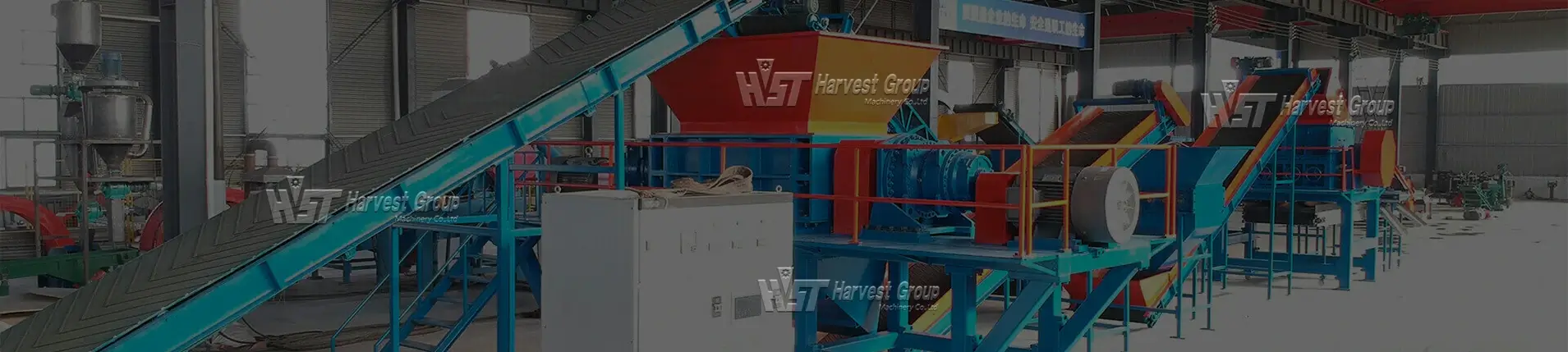
With the rapid increase in vehicle ownership worldwide, the number of end-of-life tires is rising every year. Waste tires are difficult to decompose and can remain in the environment for decades, creating serious pollution and safety risks.
Traditional disposal methods such as landfill and incineration are no longer effective. They either waste valuable land resources or cause harmful emissions without fully utilizing the materials inside tires.
A modern tire recycling plant offers a sustainable solution by converting waste tires into reusable materials with high market value.
A tire recycling plant is a complete industrial system designed to process waste tires into rubber granules, rubber powder, steel wire, and fiber.
The system integrates multiple machines working together, including tire shredder machines, rasper machines, granulators, magnetic separators, fiber separators, and fine grinding equipment.
Through continuous processing, whole tires are gradually transformed into clean and uniform materials suitable for different applications.
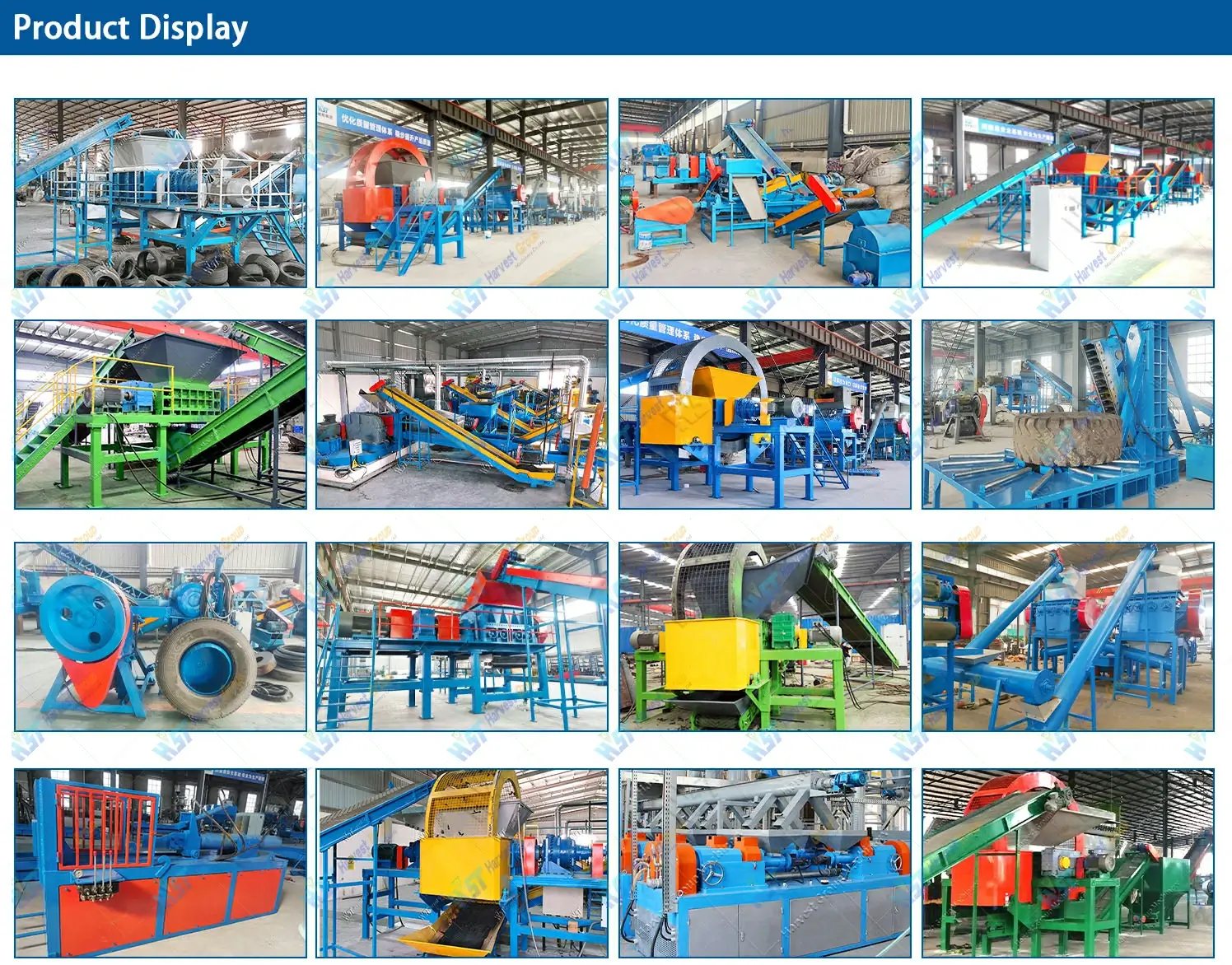
The process starts with pre-treatment, where whole tires are cut into smaller pieces. This step improves efficiency and prepares the material for further processing.
The shredded material then goes through multiple crushing stages. A tire shredder reduces the size into rubber blocks, followed by a rasper and granulator that further process the material into smaller particles.
Steel wires are removed through magnetic separation systems, while nylon fibers are separated using airflow technology.
Finally, a rubber powder production line can produce rubber powder ranging from 40 to 120 mesh, depending on your production needs.
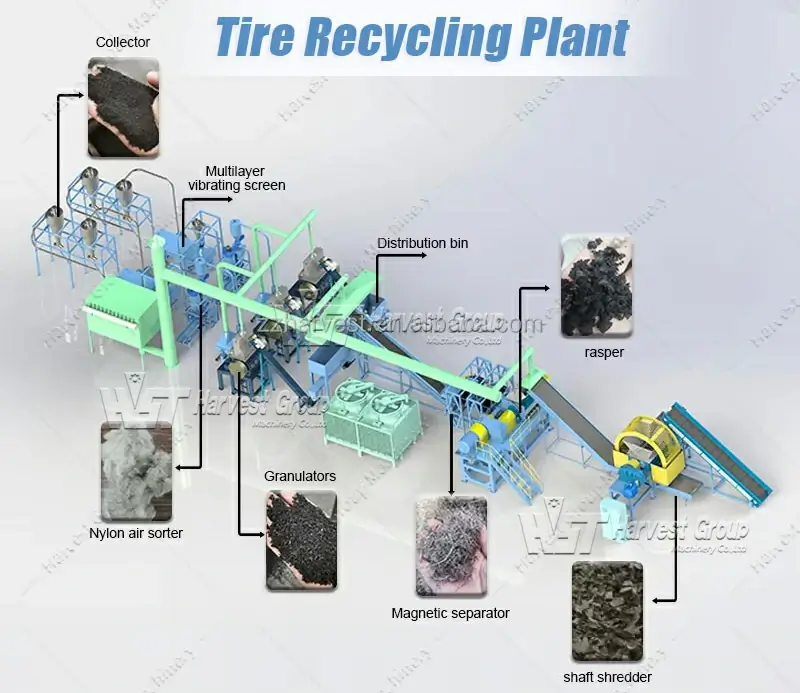
The entire process runs continuously with high efficiency and stable output.
The performance of the recycling plant depends heavily on its core machines.
The XKP series rubber crusher plays an important role in secondary crushing. It can process rubber blocks into 5–40 mesh granules with stable output size.
With dual magnetic separation systems, steel removal efficiency can reach up to 99.9 percent, ensuring high purity rubber.
For finer output, a fine grinder can produce 40–120 mesh rubber powder, which is widely used in high-value applications.
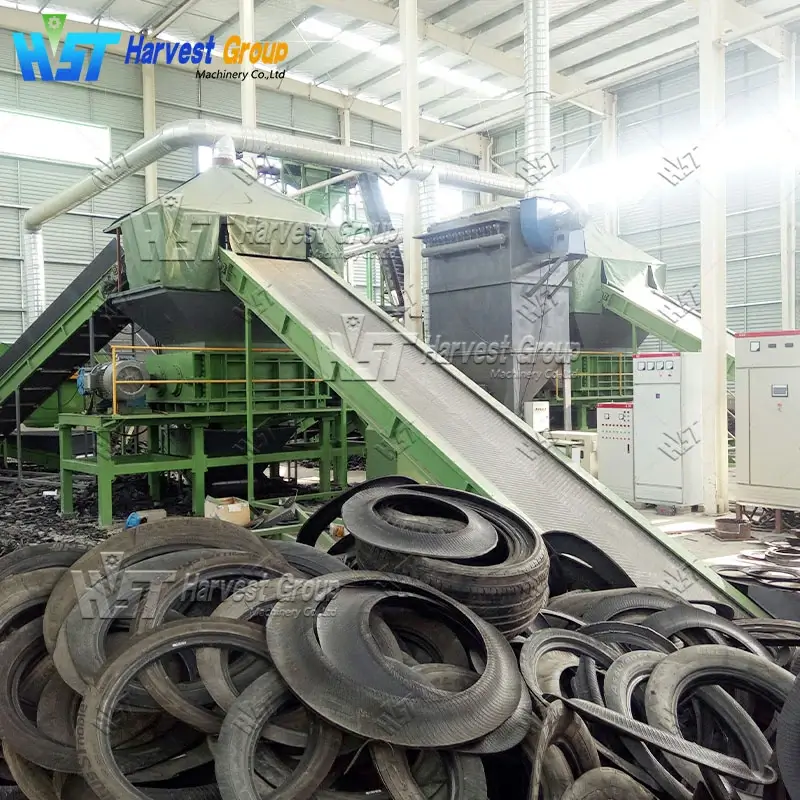
A tire recycling plant produces several types of materials with strong market demand.
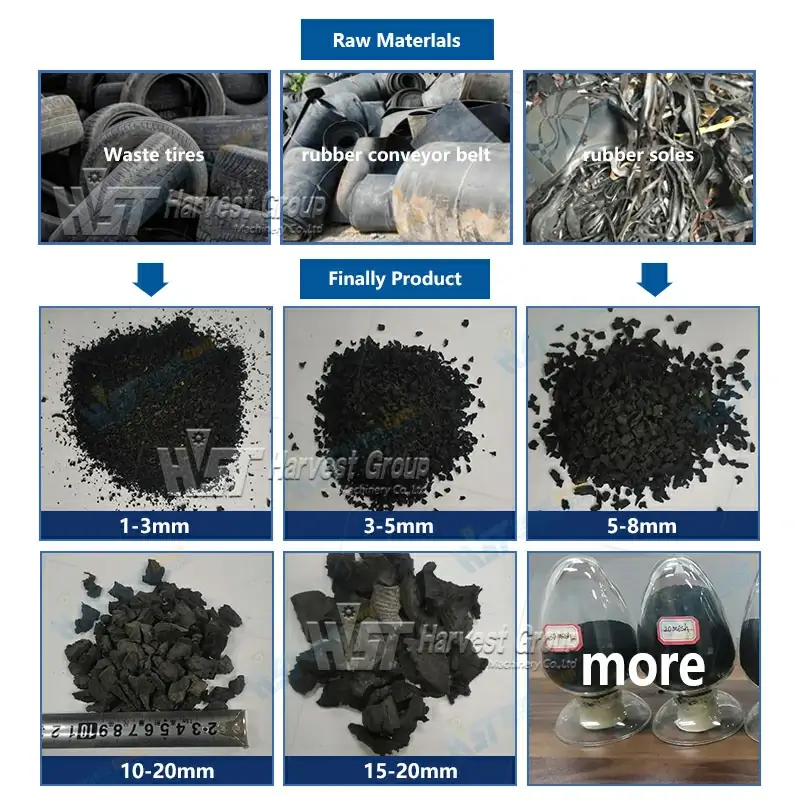
Rubber chips and mulch are used in landscaping and playground surfaces. Rubber granules are widely applied in sports fields and rubber flooring.
Fine rubber powder is used in automotive parts, sealing materials, and modified asphalt.
Recovered steel wire can be sold directly to steel factories, while nylon fiber can be reused as fuel or industrial material.
High-quality systems can achieve more than 99 percent rubber purity, making the products suitable for international markets.
The tire recycling industry offers both environmental and economic benefits.
Raw materials are easy to obtain and low in cost, while finished products have stable demand in multiple industries.
Modern recycling lines are highly automated, reducing labor costs and improving production efficiency. A complete line usually requires only two to three workers.
Flexible configurations allow you to start with a small capacity and expand later based on market demand.
With proper equipment selection, the return on investment can be achieved within a relatively short period.
You can also explore rubber mulch production lines for additional business opportunities.

Choosing the right system depends on your business goals and market positioning.
Production capacity should match your raw material supply and target output.
If your focus is high-value products, you should select equipment capable of producing fine rubber powder.
Material purity is important, especially for exporting to high-end markets.
You should also consider energy consumption, environmental standards, and after-sales support when selecting a supplier.
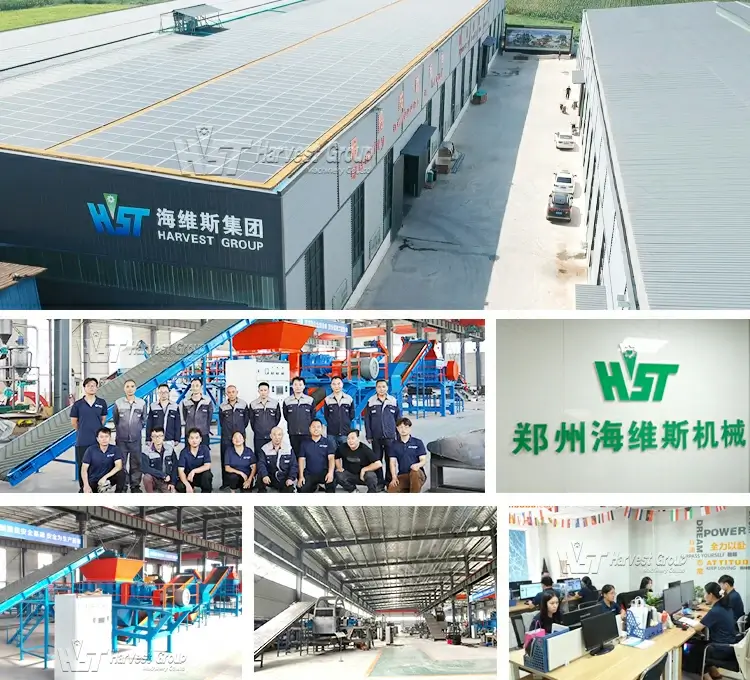
A tire recycling plant is not just a machine. It is a complete solution that determines your efficiency, product quality, and profitability.
Whether you are starting a new recycling business or upgrading your current system, choosing the right equipment is the key to long-term success.
We provide customized tire recycling solutions based on your raw materials, capacity, and final product requirements.
Contact us today to get your customized solution and quotation.
Yes, the demand for recycled rubber materials is growing steadily. In most cases, the investment can be recovered within one to two years depending on local market conditions.
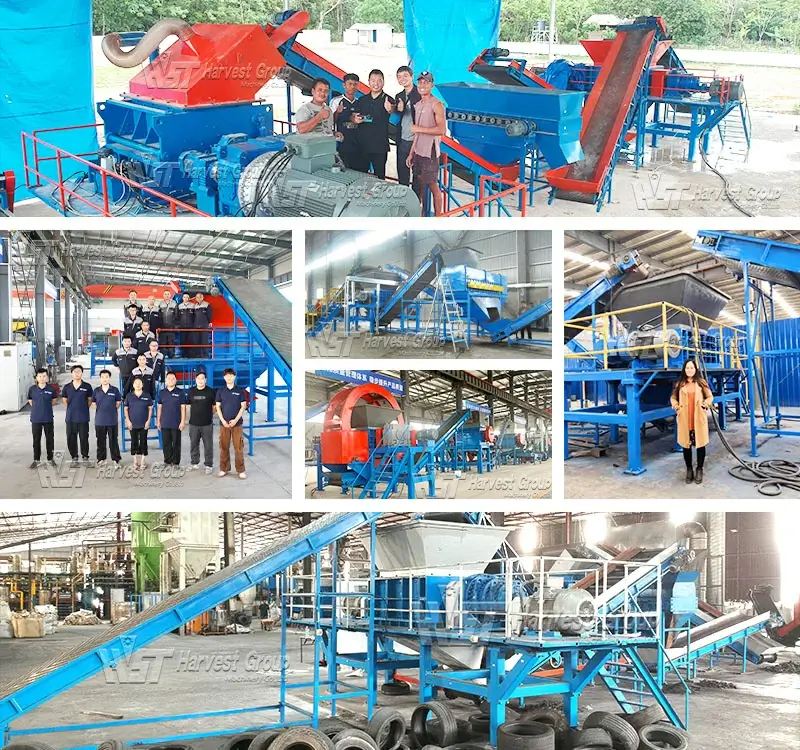
The main products include rubber chips, rubber granules, rubber powder, steel wire, and nylon fiber. These materials are widely used in construction, sports surfaces, and industrial applications.
Capacity can be customized from 200 kg per hour to 5 tons per hour or more depending on your requirements.
With advanced separation systems, rubber purity can reach over 99 percent, meeting the requirements of high-end applications.
Most systems are highly automated and require only two to three operators.
Yes, the system can handle car tires, truck tires, and OTR tires with the right configuration.
Yes, compared to landfill and incineration, recycling significantly reduces pollution and improves resource utilization.
If you are planning to invest in a tire recycling plant, the right equipment and configuration will directly impact your profitability.
Send us your raw material details and capacity requirements, and we will provide a customized solution tailored to your needs.
Get your free quote now and start your tire recycling business with confidence.