Fine rubber powder is one of the most valuable products produced from waste tire recycling. Compared with rubber chips or coarse crumb rubber, fine rubber powder between 80 and 100 mesh has significantly higher market demand because it can be used in modified asphalt, rubber products, sealing materials, sports surfaces, and high-performance industrial applications.
With the growth of environmental regulations and circular economy policies worldwide, tire recycling plants are increasingly focusing on producing finer rubber powder products rather than only selling rubber chips or coarse granules. Fine powder has higher added value and a wider range of industrial uses.
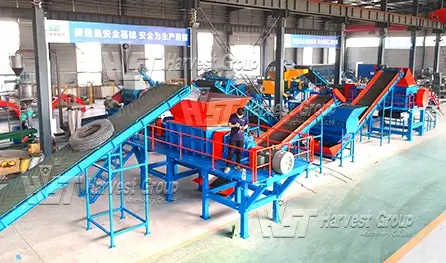
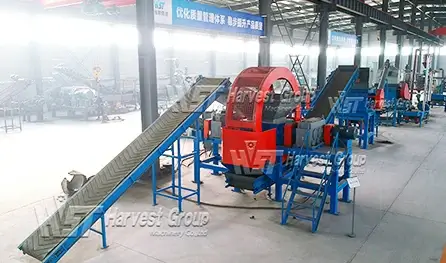
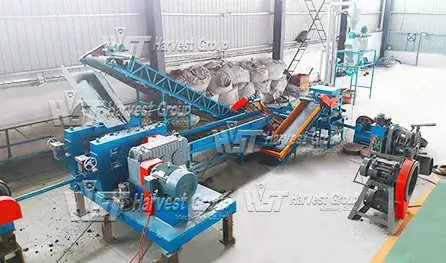
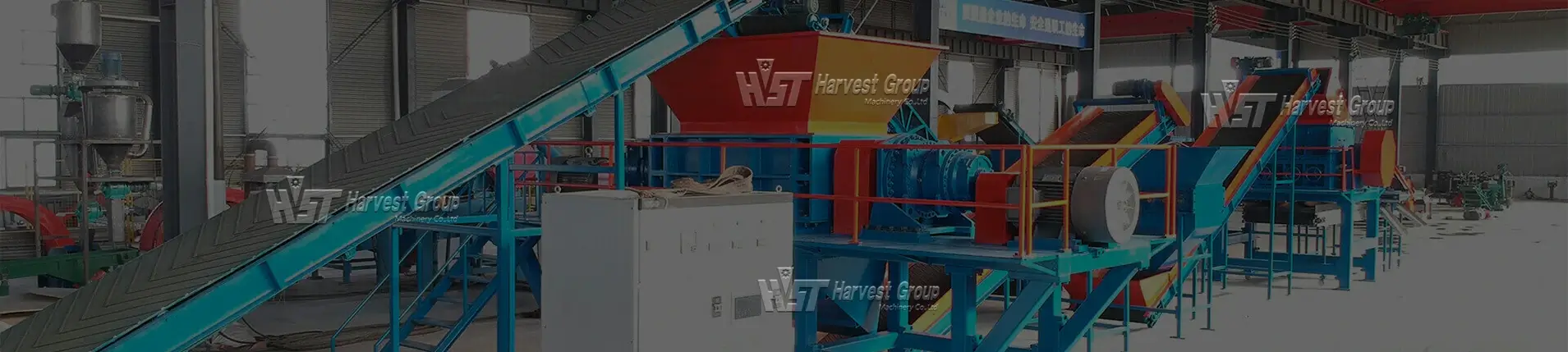
Modern tire recycling plants use multiple mechanical processes to transform waste tires into fine rubber powder while separating steel wire and nylon fiber. A complete tire recycling machine system usually includes tire cutting machines, shredders, crushers, magnetic separators, fiber separators, vibrating screening systems, and dust collection equipment.
Depending on the equipment configuration and automation level, a rubber powder production line can process hundreds of kilograms to more than one ton of waste tires per hour.
Rubber powder refers to finely ground rubber particles obtained from recycled tires. The mesh number represents particle size, and a higher mesh number means smaller particles.
80–100 mesh rubber powder belongs to the fine powder category in the tire recycling industry. At this particle size, rubber particles become very uniform and can be mixed into asphalt, rubber compounds, plastics, and construction materials.
Typical rubber particle sizes in recycling plants include:
10–20 mesh rubber granules used for rubber tiles and playground surfaces.
20–40 mesh crumb rubber used in rubber manufacturing and industrial products.
40–80 mesh fine crumb rubber commonly used in asphalt modification.
80–100 mesh fine rubber powder used in advanced industrial applications.
Fine rubber powder has several advantages compared with coarse rubber particles. The larger surface area improves bonding performance in asphalt and rubber mixtures. The uniform particle size also improves product quality in manufacturing processes.
Because of these advantages, many tire recycling plants upgrade their equipment to produce finer rubber powder instead of only producing rubber chips.
The most common raw materials used in rubber powder production are waste passenger car tires and truck tires.
Passenger car tires usually contain less steel wire and are easier to process. Truck tires contain thicker steel reinforcement and require stronger shredding and crushing equipment.
Typical tire diameters processed in recycling plants can reach up to around 1200 millimeters.
Before entering the grinding process, the tire bead wire is usually removed. Removing the bead reduces wear on downstream machines and improves crushing efficiency.
After bead removal, the tires are cut into strips or blocks to prepare them for shredding and grinding.
Producing fine rubber powder requires several mechanical stages designed to gradually reduce rubber size while removing steel wires and textile fibers.
The first stage is tire cutting. Waste tires are cut into smaller pieces using tire cutting machines.
The second stage is tire shredding. A tire shredder machine breaks the tire pieces into rubber chips.
The third stage is rubber crushing. In this stage, rubber crushers grind the shredded rubber chips into smaller particles.
Machines such as the tyre rasper machine are often used to further reduce rubber size and separate steel wire.
After crushing, the rubber particles pass through vibrating screening systems.
Magnetic separators remove steel wires from the rubber materials.
Fiber separators remove textile fibers from rubber particles.
After multiple grinding and separation cycles, the material can be refined into fine rubber powder between 80 and 100 mesh.
A complete rubber powder production line consists of several interconnected machines designed to process waste tires continuously.
The process usually begins with a tire cutting machine that reduces whole tires into manageable pieces.
The cut tire pieces are fed into a tire shredder which breaks them into rubber chips.
The rubber chips then enter a rubber crusher or cracker mill that grinds the rubber into smaller particles.
After crushing, vibrating screens classify the rubber particles according to their size.
Magnetic separators remove steel wires released during the crushing process.
Fiber separators remove nylon fibers remaining in the rubber particles.
Air conveying systems and dust collection equipment transport the rubber powder and maintain a clean production environment.
Some recycling plants install a dedicated rubber powder production line to achieve stable powder output.
Producing 80–100 mesh rubber powder requires efficient grinding technology. Most tire recycling plants use roller grinding machines because they generate strong compression and shear forces that gradually break down rubber particles.
Roller crushers normally use hardened alloy rollers with high surface hardness to ensure long service life and stable grinding performance.
Grinding usually occurs in multiple stages. Each grinding stage gradually reduces particle size while screening systems separate materials that already meet the required mesh size.
Oversized materials are returned to the grinding machines to ensure uniform particle size distribution.
Temperature control is also important during fine grinding because excessive heat may affect rubber properties. Many modern tire recycling equipment systems include cooling solutions to maintain stable operating conditions.
Efficient grinding combined with accurate screening allows recycling plants to produce uniform rubber powder with mesh sizes between 80 and 100.
Rubber powder production lines are available in several capacity levels depending on the size of the recycling plant.
Small recycling lines can produce approximately 200 to 500 kilograms of rubber powder per hour.
Medium production lines usually produce between 500 and 800 kilograms per hour.
These lines are commonly used by companies starting a tire recycling business.
Semi-automatic recycling lines can reach around 1000 kilograms per hour depending on the equipment configuration.
Large fully automated recycling plants can process several tons of waste tires per hour when multiple shredders and crushers are installed.
Selecting the correct production capacity depends on raw material availability, market demand, and investment budget.
Fine rubber powder has many industrial applications. One of the largest markets is modified asphalt used in road construction. Rubber powder improves asphalt elasticity, durability, and crack resistance.
Rubber powder is also widely used in rubber product manufacturing. It can be blended with virgin rubber to produce rubber mats, rubber tiles, seals, and molded rubber products.
Construction materials represent another important application area. Rubber powder improves flexibility and durability when used in sealants, coatings, and waterproof membranes.
Artificial turf systems and sports surfaces also use rubber powder as filler material.
Because of these applications, the global demand for recycled rubber powder continues to increase.
The investment cost of a rubber powder production line depends on production capacity and automation level.
Small recycling plants producing several hundred kilograms per hour usually require an investment of approximately forty thousand to fifty thousand US dollars.
Medium-capacity lines with higher automation levels typically require investments between sixty thousand and eighty thousand US dollars.
Large industrial recycling plants capable of processing several tons per hour require significantly higher investment but provide greater production efficiency and profitability.
In addition to equipment costs, recycling plants must also consider installation space, electricity supply, cooling systems, and dust collection systems.
A well-designed rubber powder production line layout is essential for improving production efficiency and reducing operating costs.
In a typical tire recycling plant, machines are arranged according to the material flow from whole tires to finished rubber powder.
The layout normally begins with the tire cutting section where waste tires are prepared for shredding.
After cutting, the tires move into the shredding section where tire shredders break the material into rubber chips.
These chips are transported by conveyor systems to the crushing section where rubber crushers reduce the particle size through multiple grinding stages.
Vibrating screens classify rubber particles after each grinding stage, while magnetic separators remove steel wires released during the crushing process.
Fiber separators remove textile fibers remaining in the rubber materials.
Finally, the finished rubber powder is transported through air conveying systems into storage or packaging equipment.
A typical rubber powder production plant requires approximately 200 to 300 square meters of workshop space depending on capacity.
Selecting the correct equipment is one of the most important decisions when building a tire recycling plant.
Production capacity should be considered first. Small recycling plants may start with capacities between 200 and 500 kilograms per hour, while medium plants typically operate between 500 and 800 kilograms per hour.
Particle size requirements are another key factor. Producing coarse rubber granules requires fewer grinding stages, while producing 80–100 mesh rubber powder requires additional grinding and screening systems.
Automation level also affects equipment selection. Fully automated production lines reduce labor costs but require higher initial investment.
Energy consumption and equipment durability should also be considered. High-quality crushers and separators reduce maintenance costs and ensure stable long-term operation.
Rubber powder production plants require several basic operating conditions.
Electric power supply is one of the most important requirements. Depending on production capacity, recycling plants may require electrical power ranging from about 100 kilowatts to more than 200 kilowatts.
Cooling systems are often necessary because rubber grinding generates heat. Cooling systems help maintain stable machine performance and protect rubber material quality.
Dust collection systems are also essential to maintain a clean working environment. Pulse dust collectors are widely used in tire recycling plants.
Adequate storage space for raw materials and finished products also helps improve production efficiency.
The global demand for recycled rubber powder has increased rapidly in recent years.
One of the main drivers is the use of rubber powder in asphalt modification for road construction. Rubber-modified asphalt improves road durability and reduces cracking.
The rubber manufacturing industry also consumes large quantities of recycled rubber powder as a cost-effective substitute for natural rubber.
Construction materials represent another growing market where rubber powder is used in waterproof coatings, sound insulation materials, and flexible construction products.
Sports fields and playground surfaces also use recycled rubber materials extensively.
As environmental policies become stronger worldwide, the demand for recycled rubber powder is expected to continue increasing.
Rubber powder is produced through multiple stages including tire cutting, shredding, crushing, steel wire separation, fiber separation and fine grinding.
A typical recycling system includes tire shredders, rubber crushers, magnetic separators, fiber separators, vibrating screens and dust collection systems.
In regions with sufficient waste tire supply and stable market demand, rubber powder production can be a profitable recycling business.